
As a fitness instructor, your role extends far beyond helping people lose weight, build strength, or improve their overall health. Every class you teach and every training session you lead carries an important responsibility: helping to create a safe environment where participants can exercise with confidence.
Whether you’re a personal trainer, group fitness instructor, yoga teacher, Pilates instructor, cycling coach, or strength and conditioning specialist, your clients trust you with more than their fitness goals, they trust you with their well-being.
Although exercise is one of the best ways to improve cardiovascular health, medical emergencies can still occur in gyms, health clubs, and fitness studios.
Sudden cardiac arrest, heart attack symptoms, heat-related illnesses, asthma attacks, severe allergic reactions, choking, and traumatic injuries can happen without warning—even among individuals who appear healthy.
When these emergencies occur, the actions taken during the first few minutes can make a significant difference.
Knowing how to recognize a life-threatening emergency, begin CPR, use an automated external defibrillator (AED), and coordinate an emergency response can help sustain a person’s life until emergency medical services (EMS) arrive.
That’s why CPR certification for fitness instructors is more than another professional credential.
It is a practical, life-saving skill that prepares you to respond confidently under pressure while demonstrating your commitment to client safety and professional excellence.
Whether you’re beginning your fitness career, renewing your certification, or looking to meet your employer’s requirements, understanding the value of CPR certification can help you make an informed decision.
Ready to build life-saving skills? Explore our CPR certification courses to find a class that fits your schedule and equips you with the confidence to respond when every second counts.
What Is CPR Certification for Fitness Instructors?
CPR certification for fitness instructors is specialized training that teaches exercise professionals how to recognize life-threatening emergencies, perform high-quality cardiopulmonary resuscitation (CPR), use an automated external defibrillator (AED), respond to choking emergencies, and provide immediate care until emergency medical services arrive.
Most CPR certification courses combine classroom instruction with hands-on skills practice and realistic emergency scenarios.
Upon successful completion, participants receive a certification that is widely accepted by employers, gyms, recreation centers, and many professional fitness organizations.
Why CPR Certification Matters for Fitness Instructors
Fitness professionals spend their careers helping people improve their health, but exercise naturally places additional demands on the cardiovascular and respiratory systems.
While regular physical activity significantly reduces the risk of many chronic diseases, some individuals may have undiagnosed medical conditions that become apparent only during physical exertion.
For example, a participant may unknowingly have an underlying heart condition, experience severe dehydration during an intense workout, or suffer an unexpected allergic reaction after consuming a supplement before class. In these situations, a knowledgeable instructor can provide immediate assistance while waiting for professional medical care.
The First Few Minutes Matter
When someone experiences sudden cardiac arrest, their heart unexpectedly stops pumping blood effectively. Without immediate intervention, oxygen-rich blood can no longer reach the brain and other vital organs.
High-quality CPR helps circulate oxygenated blood throughout the body until an AED can be used or emergency responders take over care. Prompt recognition of the emergency, rapid activation of EMS, early CPR, and early defibrillation are all critical components of the “chain of survival” that improve a person’s chances of survival.
As a fitness instructor, you are often the closest trained individual available when an emergency occurs. Your ability to respond calmly and quickly may help preserve life during those crucial first minutes.
CPR Certification Builds Confidence
Many new instructors worry about how they would react during a real emergency. CPR certification training helps replace uncertainty with preparation by giving you opportunities to practice emergency response skills in a controlled learning environment.
During training, you’ll develop confidence in how to:
- Recognize signs of a life-threatening emergency
- Assess whether a person is responsive and breathing normally
- Activate the emergency response system
- Perform high-quality CPR
- Use an Automated External Defibrillator (AED)
- Assist someone experiencing a choking emergency
- Work effectively with bystanders and emergency responders
This preparation allows you to respond more efficiently and confidently should an emergency occur.
It Demonstrates Professionalism
Maintaining current CPR certification also reflects positively on your professionalism.
Clients are more likely to feel confident working with instructors who prioritize safety alongside fitness instruction. Employers also recognize CPR certification as evidence that an instructor is prepared to respond responsibly during emergencies.
For independent personal trainers, CPR certification can serve as an additional trust signal that reassures clients they are training with someone who values both performance and safety.
Professional Tip: If you’re enrolling in CPR training, consider a combined CPR, AED, and First Aid certification course certified by either the American Red Cross or American Heart Association. Many employers prefer instructors who can respond to a broader range of emergencies, from cardiac arrest to common injuries such as cuts, burns, sprains, and heat-related illnesses.
Do Fitness Instructors Need CPR Certification?
In many cases, the answer is yes.
While CPR certification requirements vary depending on your employer, certification organization, and local regulations, many fitness facilities require instructors to maintain a current CPR and AED certification as a condition of employment.
Even when certification is not legally mandated, it has become an industry best practice because of the responsibility fitness professionals have for participant safety.
Employers That Commonly Require CPR Certification
Current CPR certification is commonly expected by:
- Commercial fitness centers
- Boutique fitness studios
- Community recreation centers
- YMCA and municipal recreation programs
- Corporate wellness programs
- Colleges and universities
- Sports performance facilities
- Youth athletic organizations
- Senior fitness programs
- Hotel and resort fitness centers
Many employers also recommend or require First Aid certification, whether American Heart Association or American Red Cross-certified, alongside CPR training.
What About Independent Personal Trainers? Do they need CPR certification?
If you work independently, CPR certification is still highly recommended.
Clients often choose personal trainers based on their qualifications, experience, and professionalism. Holding current CPR certification demonstrates that you are prepared for unexpected situations and committed to maintaining a safe training environment.
It may also strengthen your credibility when marketing your services or working with higher-risk populations, including older adults or individuals with chronic health conditions.
Should You Check Your Certification Requirements?
Absolutely.
Different employers and professional certification organizations may have specific requirements regarding:
- Accepted training providers
- CPR and AED certification
- First Aid certification
- Renewal intervals
- Hands-on skills assessments
Before enrolling in a course, verify that it meets the standards required by your employer or professional credentialing organization.
Need CPR certification for a new job or upcoming renewal? Choosing a course that includes hands-on skills practice, AED training, and an employer-recognized certification can help you meet workplace requirements with confidence.
Common Emergencies in Fitness Facilities
Although sudden cardiac arrest receives the most attention, fitness instructors may encounter a variety of medical emergencies during classes and personal training sessions. Recognizing these situations early allows you to respond appropriately while activating emergency medical services when necessary.
Sudden Cardiac Arrest
Sudden cardiac arrest occurs when the heart unexpectedly stops beating effectively. The person may suddenly collapse, become unresponsive, and stop breathing normally.
This is one of the most time-sensitive emergencies you may encounter in a fitness environment. Immediate CPR and rapid access to an AED can significantly improve the person’s chance of survival.
Heart Attack Symptoms
Unlike sudden cardiac arrest, a heart attack usually occurs when blood flow to part of the heart is blocked.
Warning signs may include:
- Chest pain or pressure
- Pain spreading to the arm, jaw, neck, or back
- Shortness of breath
- Nausea
- Cold sweats
- Unusual fatigue
Recognizing these symptoms quickly and activating EMS can help the individual receive timely medical treatment.
Heat Exhaustion and Heat Stroke
High-intensity exercise, warm environments, and dehydration can contribute to heat-related illnesses.
Heat exhaustion may cause:
- Heavy sweating
- Weakness
- Dizziness
- Headache
- Muscle cramps
Heat stroke is a medical emergency and may include:
- Altered mental status
- Confusion
- High body temperature
- Hot skin
- Collapse
Knowing how to recognize these conditions allows instructors to respond appropriately while seeking emergency care when necessary.
Asthma Attacks
Exercise can trigger breathing difficulties in individuals with asthma.
Someone experiencing an asthma attack may have:
- Wheezing
- Persistent coughing
- Difficulty speaking
- Shortness of breath
- Chest tightness
Early recognition and prompt activation of emergency care when symptoms become severe are essential.
Severe Allergic Reactions
Some clients may experience life-threatening allergic reactions to foods, medications, insect stings, or supplements consumed before exercise.
Signs may include:
- Swelling of the face or throat
- Difficulty breathing
- Hives
- Dizziness
- Loss of consciousness
These emergencies require immediate medical attention.
Choking Emergencies
Although less common during exercise, choking can occur before or after a workout while eating or drinking.
CPR certification teaches instructors how to recognize the difference between mild and severe airway obstruction and how to respond appropriately if a person becomes unconscious.
Fainting and Loss of Consciousness
Fainting may result from dehydration, overheating, low blood sugar, or underlying medical conditions.
Even if a person regains consciousness quickly, they should be assessed carefully, and emergency services should be contacted when appropriate.
Falls and Exercise-Related Injuries
Trips, slips, equipment accidents, and overexertion can lead to injuries ranging from minor sprains to serious fractures or head injuries.
While not every injury requires CPR, fitness instructors should know how to assess the situation, ensure scene safety, and activate emergency medical services when a serious injury is suspected.
Key Takeaway: CPR certification prepares fitness instructors for far more than cardiac arrest. It helps you recognize a wide range of emergencies, respond appropriately, and provide immediate assistance until professional medical care arrives, making your fitness environment safer for everyone.
What Does a CPR Certification Course Cover?
A quality CPR certification course is designed to prepare you to respond effectively during life-threatening emergencies. Rather than simply teaching theory, modern CPR training combines evidence-based instruction with hands-on practice, allowing participants to build confidence before they ever face a real emergency.
For fitness instructors, this practical training is especially valuable. Gyms, health clubs, and fitness studios are active environments where quick decision-making and effective communication can make a meaningful difference if a participant experiences a medical emergency.
Although course content varies slightly depending on the training provider and certification level, most CPR certification courses cover several core life-saving skills.
Recognizing Life-Threatening Emergencies
Before CPR begins, it’s important to recognize when someone needs immediate help.
One of the first lessons in a CPR course is learning how to quickly evaluate an emergency while keeping yourself and others safe.
You’ll learn how to:
- Assess scene safety before approaching the victim.
- Determine whether a person is responsive.
- Recognize abnormal or absent breathing.
- Identify signs of sudden cardiac arrest.
- Activate the emergency response system quickly.
- Understand when CPR and AED use may be appropriate.
Early recognition is one of the most important links in the chain of survival because every minute without intervention decreases the likelihood of a successful outcome.
Professional Tip: Remaining calm and recognizing the emergency quickly is often just as important as knowing how to perform CPR itself.
High-Quality CPR
High-quality CPR is one of the most important skills you’ll develop during your certification course.
The goal of CPR is to help circulate oxygen-rich blood to the brain and other vital organs until the heart can be restarted or advanced medical care becomes available.
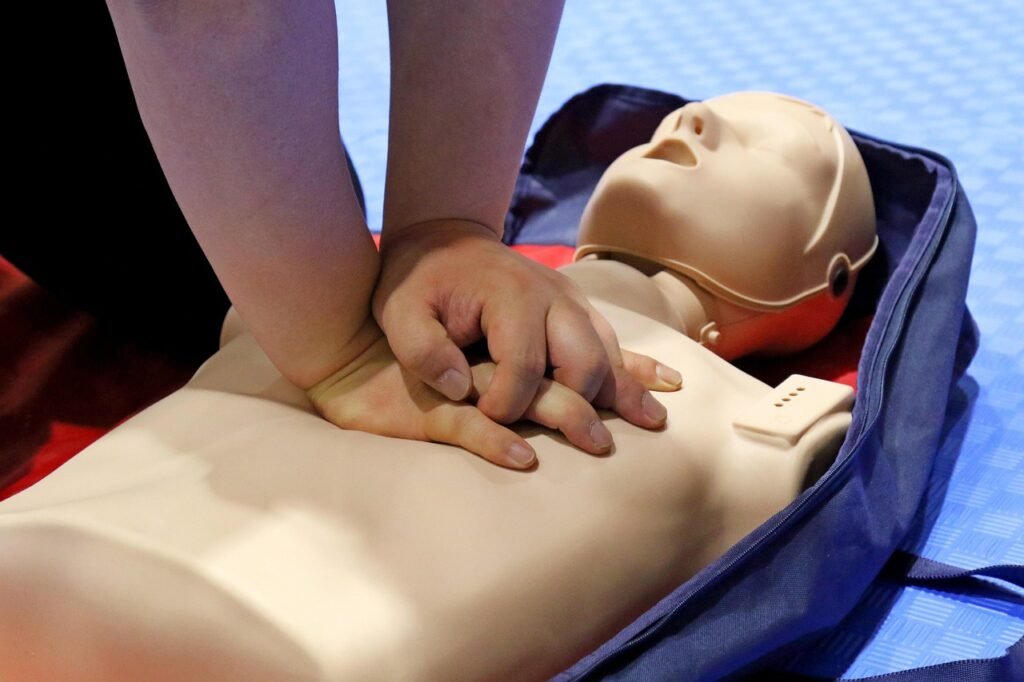
During hands-on practice, you’ll learn techniques such as:
- Proper hand placement
- Effective compression depth
- Appropriate compression rate
- Allowing complete chest recoil
- Minimizing interruptions during compressions
- Coordinating CPR with other rescuers when appropriate
Training typically includes practice on CPR manikins so participants can receive instructor feedback and become comfortable performing the techniques correctly.
Why High-Quality CPR Matters
Research has consistently shown that the quality of CPR can influence outcomes during cardiac arrest. Consistent, effective chest compressions help maintain blood circulation until emergency responders arrive with advanced equipment and treatments.
For fitness instructors, confidence in these skills is especially important because they are often among the first people available to assist a participant who collapses during exercise.
Real-World Scenario
Imagine you’re leading a boot camp class when a participant suddenly collapses and becomes unresponsive. While another staff member calls 911 and retrieves the AED, you begin providing CPR according to your training.
Because you’ve practiced these skills during certification, you’re able to respond calmly, communicate with those around you, and provide immediate care until emergency medical services arrive.
AED Training
An Automated External Defibrillator (AED) is a portable medical device designed to analyze the heart’s rhythm and, when appropriate, deliver an electrical shock to help restore a normal heartbeat during certain types of sudden cardiac arrest.
Many fitness facilities now keep AEDs readily accessible because they play a critical role in emergency response.
Knowing that an AED is available is only part of the equation—you also need to know how to use it confidently.
What You’ll Learn During AED Training
Most CPR certification courses include instruction on how to:
- Locate and retrieve an AED quickly.
- Turn the device on.
- Apply the electrode pads correctly.
- Follow the AED’s voice and visual prompts.
- Ensure everyone is clear before a shock is delivered.
- Resume CPR immediately after the device instructs you to do so.
Modern AEDs are designed to guide rescuers through each step, making them suitable for use by trained lay responders as well as healthcare professionals.
Why AED Training Is Important in Fitness Facilities
Because gyms and fitness centers often serve adults participating in vigorous exercise, many employers consider CPR and AED training essential qualifications for instructors.
If your workplace already has an AED, your certification course helps ensure you’re prepared to use it effectively during an emergency.
Did You Know? Many health clubs, community recreation centers, schools, and corporate wellness facilities have AEDs located in easily accessible areas. As a fitness professional, you should know exactly where the AED is located before every class begins.
Choking Emergencies
Although choking is less common during exercise than cardiac emergencies, it can still occur before or after workouts while participants are eating, drinking, or taking nutritional supplements.
A blocked airway can quickly become life-threatening if it isn’t recognized and treated promptly.
CPR certification teaches instructors how to identify the signs of choking and respond appropriately.
You’ll Learn How to Respond to Choking Emergencies Involving:
- Adults
- Children
- Infants
Training covers:
- Recognizing mild versus severe airway obstruction.
- Encouraging someone who can still cough to continue coughing.
- Providing appropriate care when a person cannot breathe, speak, or cough.
- Knowing what to do if the person becomes unconscious.
- Transitioning to CPR when appropriate.
These practical skills help prepare instructors to respond quickly while activating emergency medical services when necessary.
Emergency Response
Performing CPR is only one part of managing a medical emergency.
An effective response also requires communication, leadership, and teamwork.
Throughout your certification course, you’ll learn how to respond in an organized and systematic way while maintaining scene safety.
Emergency Response Skills Often Include
- Assessing the safety of the environment.
- Activating emergency medical services (EMS).
- Directing someone to retrieve the AED.
- Assigning tasks to bystanders.
- Communicating clearly with emergency responders.
- Monitoring the individual until EMS arrives.
- Working effectively as part of a rescue team when multiple responders are available.
These skills help reduce confusion during stressful situations and improve coordination until professional medical care takes over.
The Importance of an Emergency Action Plan
Every fitness facility should have a written emergency action plan outlining how staff should respond to medical emergencies.
As an instructor, you should know:
- Where emergency exits are located.
- Where the AED is stored.
- Where first aid supplies are kept.
- Who contacts EMS.
- Who directs emergency responders to the scene.
- How incidents are documented after the event.
Becoming familiar with your facility’s procedures before an emergency occurs helps you respond more efficiently when every second matters.
Quick Tip: Before teaching your first class at a new facility, take a few minutes to locate the AED, first aid kit, emergency phone, and emergency exits. Preparation before an emergency can save valuable time during one.
CPR Certification vs. First Aid Certification
Many fitness professionals wonder whether CPR certification alone is enough.
The answer depends on your employer and your role.
CPR certification focuses on responding to life-threatening cardiac and breathing emergencies, while First Aid certification prepares you to manage many common injuries and illnesses that occur in everyday settings.
Both certifications complement each other and together provide a broader foundation for emergency preparedness.
| CPR Certification | First Aid Certification |
|---|---|
| Cardiac arrest response | Cuts and bleeding |
| Chest compressions | Burns |
| Rescue breathing (when appropriate) | Sprains and strains |
| AED use | Fractures |
| Choking emergencies | Heat exhaustion and heat stroke |
| Life-threatening emergencies | Allergic reactions |
| Emergency response activation | Seizures and other medical conditions |
Should Fitness Instructors Have Both?
In many cases, yes.
Fitness instructors frequently supervise groups of people participating in physical activity, making them more likely to encounter both life-threatening emergencies and non-life-threatening injuries.
Holding both certifications prepares you to respond to a wider range of situations, including:
- Minor injuries during workouts.
- Heat-related illnesses.
- Allergic reactions.
- Falls and sprains.
- Cardiac arrest.
- Choking emergencies.
Many gyms and recreation facilities either recommend or require instructors to maintain both CPR and First Aid certification.
Looking for complete emergency preparedness? A combined CPR, AED, and First Aid certification course offers comprehensive training that prepares fitness professionals for many of the emergencies they may encounter in the workplace.
CPR Certification vs. BLS Certification
Another common question among fitness professionals is whether they need Basic Life Support (BLS) certification instead of a standard CPR certification.
Although both courses teach life-saving skills, they are designed for different audiences.
| CPR Certification | BLS Certification |
|---|---|
| Designed for workplace responders and the general public | Designed primarily for healthcare professionals |
| Covers CPR, AED use, and choking response | Includes CPR plus team-based resuscitation techniques |
| Appropriate for most fitness instructors | Commonly required for nurses, physicians, EMTs, paramedics, and other clinical staff |
| Focuses on responding until EMS arrives | Focuses on both prehospital and clinical emergency care |
Which Certification Do Fitness Instructors Need?
For most personal trainers, yoga instructors, group fitness instructors, and strength coaches, a standard CPR and AED certification that meets employer requirements is appropriate.
However, if you work in a clinical setting, collaborate with healthcare providers, or your employer specifically requires BLS certification, you should enroll in the appropriate course.
When in doubt, always verify your employer’s certification requirements before registering.
Key Takeaway: Most fitness professionals do not need BLS certification unless it is specifically required by their employer or professional organization. A high-quality CPR and AED certification is sufficient for the majority of fitness industry roles.
How to Get CPR Certified
Earning your CPR certification is a straightforward process, but choosing the right course is essential. Whether you’re starting your career as a personal trainer or renewing an existing certification, selecting employer-recognized training with hands-on practice will help ensure you’re prepared for real-world emergencies.
Most CPR certification courses can be completed in a single day, although the exact duration depends on the course format and provider. Many organizations also offer blended learning options that combine online coursework with an in-person skills assessment.
Step 1: Determine Your Employer’s Requirements
Before registering for a class, check whether your employer or professional certification organization has specific requirements regarding:
- Accepted training providers
- CPR and AED certification
- First Aid certification
- Hands-on skills assessments
- Certification renewal intervals
Verifying these requirements beforehand helps ensure your certification will be accepted.
Step 2: Choose an Accredited CPR Training Course
Look for a course that follows current CPR guidelines and includes practical, instructor-led skills training.
A quality course should provide opportunities to:
- Practice CPR on training manikins
- Use an AED trainer
- Respond to realistic emergency scenarios
- Ask questions and receive instructor feedback
Hands-on experience is one of the most valuable parts of CPR training because it builds confidence before a real emergency occurs.
Step 3: Complete the Training
During the course, you’ll learn how to:
- Recognize medical emergencies
- Perform high-quality CPR
- Use an AED
- Respond to choking emergencies
- Communicate with EMS
- Work effectively during emergency situations
Most courses combine classroom instruction with practical demonstrations and supervised skills practice.
Step 4: Demonstrate Your Skills
Before receiving certification, you’ll typically demonstrate that you can perform CPR and other required skills correctly.
This practical assessment ensures participants can confidently apply what they’ve learned.
Step 5: Receive Your Certification
After successfully completing the course, you’ll receive your CPR certification.
Most certifications remain valid for two years, although this can vary depending on your employer and the training provider.
Ready to get certified? Our CPR certification courses combine expert instruction, hands-on practice, and realistic emergency scenarios to help fitness professionals develop confidence and meet employer requirements.
Choosing the Right CPR Certification Course
Not all CPR courses provide the same level of training.
When comparing providers, look beyond price and convenience. The best course is one that prepares you to respond confidently during an emergency while meeting your employer’s certification requirements.
Look for These Features
Choose a provider that offers:
- Experienced, qualified instructors
- Hands-on CPR practice
- AED training
- Current CPR guidelines
- Realistic emergency scenarios
- Employer-recognized certification
- Flexible scheduling options
- Small class sizes for personalized instruction
- Opportunities to ask questions and receive feedback
If your employer requires CPR and First Aid certification, enrolling in a combined course can save time while expanding your emergency response skills.
Questions to Ask Before You Register
Before enrolling, consider asking:
- Is this certification accepted by my employer?
- Does the course include AED training?
- Is hands-on practice included?
- Will I receive an official certification card?
- Is First Aid available as part of the course?
- Are renewal courses offered?
- What happens if I need to reschedule?
Taking a few minutes to compare courses can help you choose the option that best fits your professional goals.
Maintaining Your CPR Skills
Receiving your certification is only the beginning. Like any practical skill, CPR becomes more effective when it is reviewed and practiced regularly.
Even experienced instructors benefit from periodic refresher training because emergency situations are stressful, and confidence comes from familiarity.
Tips for Staying Prepared
To maintain your skills:
- Review CPR procedures regularly.
- Renew your certification before it expires.
- Participate in refresher courses when available.
- Practice emergency response scenarios with coworkers.
- Learn your facility’s emergency action plan.
- Know where the AED and first aid kit are located.
- Participate in emergency drills if your workplace offers them.
Regular practice helps ensure you’ll be ready to act quickly and confidently if an emergency occurs.
Why Renewal Matters
Most CPR certifications are valid for two years.
Renewing your certification:
- Keeps your skills current.
- Helps you stay familiar with updated recommendations.
- Maintains employer compliance.
- Prevents gaps in your professional qualifications.
Many providers offer streamlined renewal courses for individuals with current or recently expired certifications.
Need to renew your certification? Enrolling before your certification expires helps you stay prepared without interrupting your employment or professional credentials.
Creating an Emergency Action Plan for Your Fitness Facility
Even the best CPR training is most effective when combined with a well-organized emergency action plan.
An emergency action plan outlines exactly what staff members should do if someone experiences a medical emergency.
Having a plan in place reduces confusion, improves communication, and helps emergency responders reach the individual as quickly as possible.
What Every Fitness Instructor Should Know
Before teaching a class, make sure you know:
- Where the AED is located.
- Where the first aid kit is stored.
- How to contact EMS.
- The facility’s emergency exits.
- Who is responsible for directing emergency responders.
- How incidents are documented after an emergency.
If you’re new to a gym or fitness center, take a few minutes before your first class to familiarize yourself with these procedures.
During an Emergency
An organized response may include:
- Recognizing the emergency.
- Ensuring the scene is safe.
- Calling 911 or directing someone else to do so.
- Retrieving the AED.
- Beginning CPR if appropriate.
- Communicating clearly with other staff members.
- Continuing care until EMS arrives.
Preparation before an emergency often makes the response smoother when every second counts.
Myth vs. Fact: CPR Certification for Fitness Instructors
Misunderstandings about CPR certification can discourage fitness professionals from seeking training or leave them uncertain about their responsibilities. Here are some common myths and the facts behind them.
Myth Fact Only older adults experience cardiac emergencies during exercise. Cardiac emergencies can occur in people of different ages, including apparently healthy individuals with undiagnosed conditions. CPR is only for doctors and nurses. CPR can be performed by trained workplace responders, fitness professionals, teachers, coaches, parents, and other members of the public. An AED is difficult to operate. Modern AEDs provide clear voice and visual prompts that guide users through each step of the process. CPR always restarts the heart. CPR helps maintain blood flow to the brain and vital organs until advanced medical care and, when appropriate, defibrillation can be provided. If a gym has an AED, I don’t need CPR training. CPR and AED use work together. CPR helps maintain circulation while the AED analyzes the heart’s rhythm and provides guidance when a shock is appropriate. Understanding these facts can help fitness instructors feel more confident about the importance of CPR training and emergency preparedness.
Fitness Instructor Emergency Readiness Checklist
Use this checklist to assess your preparedness before every class.
Personal Preparedness
✔ Current CPR certification
✔ Current AED certification (if applicable)
✔ First Aid certification
✔ CPR skills reviewed regularly
✔ Comfortable responding to emergencies
Facility Preparedness
✔ Know where the AED is located
✔ Know where the first aid kit is stored
✔ Know the emergency exits
✔ Familiar with the facility’s emergency action plan
✔ Emergency contact procedures understood
Professional Preparedness
✔ Certification is current
✔ Renewal date recorded
✔ Employer requirements verified
✔ Emergency drills completed
✔ Continuing education maintained
Completing this checklist regularly helps reinforce good habits and promotes a safer environment for both instructors and participants.
Conclusion
Fitness instructors inspire people to become healthier, stronger, and more confident. Along with that opportunity comes the responsibility to create a safe environment where participants can exercise knowing they’re in capable hands.
Although serious medical emergencies are relatively uncommon in fitness settings, they can happen without warning. Sudden cardiac arrest, choking, severe allergic reactions, heat-related illnesses, and other emergencies require immediate action, and the first few minutes before emergency medical services arrive can be critical.
CPR certification equips fitness professionals with practical, life-saving skills that go far beyond earning another credential. Through hands-on training, you’ll learn how to recognize emergencies, perform high-quality CPR, use an AED, respond to choking incidents, and work effectively as part of an emergency response team.
Whether you’re a personal trainer, yoga instructor, group fitness coach, Pilates teacher, strength and conditioning specialist, or wellness professional, maintaining current CPR certification demonstrates professionalism, supports client safety, and helps meet the expectations of many employers throughout the fitness industry.
Investing in CPR certification is ultimately an investment in your career, your confidence, and the well-being of every client who trusts you to lead them safely toward their health and fitness goals.
Ready to Earn Your CPR Certification?
Whether you’re beginning your career as a fitness instructor, changing employers, or renewing an existing certification, obtaining high-quality CPR training is one of the most valuable investments you can make in your professional development.
Our CPR certification courses combine expert instruction, hands-on skills practice, realistic emergency scenarios, and employer-recognized certification to help you build the confidence needed to respond effectively when emergencies occur.
If you’re looking for even broader emergency preparedness, consider our combined CPR, AED, and First Aid Certification Course, which equips fitness professionals to manage a wide range of emergencies commonly encountered in gyms, health clubs, recreation centers, and wellness facilities.
Explore our upcoming CPR certification classes, compare available training options, or contact our team today to find the course that’s right for you. Gain life-saving skills, meet employer requirements, and become the confident leader your clients can rely on when every second matters.
Frequently Asked Questions
Is CPR certification for fitness instructors a requirement?
Many employers, gyms, recreation centers, and fitness organizations require instructors to maintain current CPR and AED certification. Even when it isn’t mandatory, CPR certification is widely recognized as an industry best practice.
What type of CPR certification do personal trainers need?
Most personal trainers need a CPR and AED certification that meets their employer’s or professional certification organization’s requirements. Some employers also require or recommend First Aid certification.
Should yoga and Pilates instructors be CPR certified?
Yes. Yoga and Pilates instructors also supervise participants during physical activity and may be responsible for responding to medical emergencies until EMS arrives.
Does CPR certification include AED training?
Most CPR certification courses include instruction on recognizing sudden cardiac arrest, using an Automated External Defibrillator (AED), and integrating AED use with CPR.
How long does it take to become CPR certified?
Many CPR certification courses can be completed in a single day, although the exact duration depends on the provider and course format.
How long does CPR certification last?
Most CPR certifications remain valid for two years. Check with your employer or training provider for specific renewal requirements.
Can I complete CPR certification online?
Some providers offer blended learning programs that combine online coursework with an in-person skills assessment. Before enrolling, confirm that your employer accepts the course format.
Should fitness instructors also obtain First Aid certification?
Yes. Holding both CPR and First Aid certifications prepares instructors to respond to a wider variety of emergencies, including cardiac arrest, choking, burns, allergic reactions, heat-related illnesses, and common workout injuries.
What happens if my CPR certification expires?
An expired certification may no longer meet employer or professional certification requirements. Renewing before expiration helps maintain compliance and ensures your skills remain current.
How often should I practice my CPR skills?
Although certification is typically renewed every two years, reviewing CPR procedures regularly, participating in refresher training, and taking part in workplace emergency drills can help maintain confidence and preparedness.