
Many people hear “CPR certification” and “First Aid certification” used together and assume they mean the same thing. While they are closely related and often taught in the same course, they are not identical.
Understanding the difference helps you choose the right training for your job, school requirements, or personal preparedness.
Quick Definition of CPR Certification
CPR certification focuses specifically on life-saving techniques used when someone’s heart or breathing stops.
It teaches you how to respond to emergencies such as:
- Sudden cardiac arrest
- Drowning
- Choking (in severe cases)
The goal of CPR is simple: keep oxygen flowing to the brain and heart until emergency medical help arrives.
Quick Definition of First Aid Certification
First Aid certification covers a broader range of everyday injuries and medical emergencies.
It includes how to respond to:
- Cuts and bleeding
- Burns
- Fractures and sprains
- Allergic reactions
- Minor injuries and shock
First aid focuses on stabilizing a person’s condition and preventing it from getting worse before professional care arrives.
CPR vs First Aid Certification: Key Differences
Although they overlap in emergency response, they serve different purposes.
Scope:
- CPR: Life-threatening cardiac and breathing emergencies
- First Aid: General injuries and medical issues
Focus:
- CPR: Resuscitation and survival techniques
- First Aid: Injury care and stabilization
Typical Use Cases:
- CPR: Emergency collapse, choking, cardiac arrest
- First Aid: Workplace injuries, cuts, burns, sprains
Training Depth:
- CPR is more focused and specialized
- First Aid is broader and more general
Do You Need Both CPR and First Aid Certification?
In many real-world situations, both certifications are recommended—or even required.
Workplace Requirements
Employers often require both certifications for safety compliance, especially in:
- Construction
- Education
- Healthcare support roles
- Fitness and coaching environments
Childcare and Teaching Roles
Teachers and childcare providers are often expected to know both CPR and first aid because they deal with:
- Injuries on the playground
- Allergic reactions
- Emergency collapses
Healthcare Expectations
Healthcare workers typically need CPR as part of broader emergency training such as Basic Life Support.
What You Learn in CPR Training
CPR courses typically include:
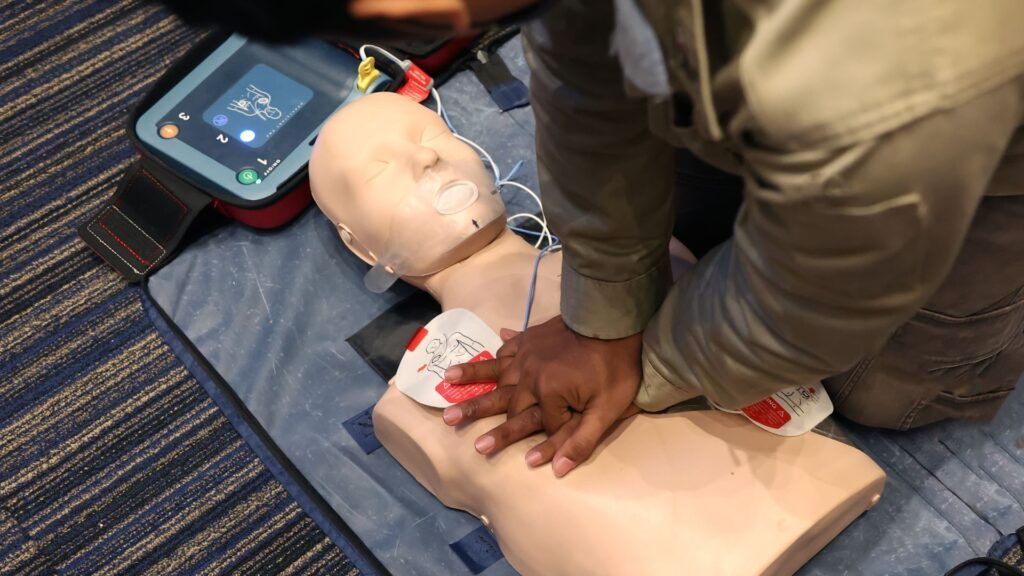
- Chest compressions
- Rescue breathing techniques
- Use of an AED
- Choking response techniques
- Adult, child, and infant CPR
The focus is on restoring circulation and breathing during critical emergencies.
What You Learn in First Aid Training
First aid training includes:
- Wound cleaning and bandaging
- Treating burns
- Managing fractures and sprains
- Handling allergic reactions
- Recognizing stroke or shock symptoms
- Emergency response decision-making
The focus is on preventing injury from worsening before medical help arrives.
Combined CPR and First Aid Certification Courses
Most training providers offer combined courses that include both CPR and First Aid certification.
These combined programs are popular because they:
- Save time
- Cover a wider range of emergencies
- Meet most workplace requirements
- Improve confidence in real-life situations
If you are unsure which to choose, a combined course is usually the most practical option.
CPR vs First Aid vs BLS (Simple Comparison)
| Certification | Focus | Best For |
|---|---|---|
| CPR | Life-saving resuscitation | General public, caregivers |
| First Aid | Injury care and stabilization | Workplace safety, teachers |
| BLS | Advanced emergency response | Healthcare professionals |
Common Misconceptions
“CPR includes everything in First Aid”
Not true. CPR is only a small part of emergency care.
“First Aid alone is enough for emergencies”
First aid does not replace CPR in life-threatening cardiac situations.
“You only need one certification”
In many jobs and real situations, both are needed together.
Which Certification Should You Choose?
Choose CPR certification if:
- You want to respond to life-threatening emergencies
- You are a parent, caregiver, or general community member
Choose First Aid certification if:
- You deal with injuries in a workplace or school setting
Choose both if:
- You want full emergency preparedness
- You work in childcare, education, or healthcare support roles
Final Thoughts
CPR and First Aid certifications are closely connected but serve different purposes. CPR focuses on saving lives during cardiac or breathing emergencies, while first aid focuses on treating injuries and stabilizing conditions.
For most people, especially those responsible for others at work or home, combining both certifications provides the strongest level of preparedness.
Call to Action
Be ready for real emergencies—not just informed about them.
Enroll in a combined CPR and First Aid certification course today and gain the confidence to act when it matters most.
If you’re ready to feel confident in real emergencies, now is the best time to get certified.
Join a combined CPR and First Aid training course today and learn the skills that can help you save a life.
Frequently Asked Questions
Is CPR part of First Aid certification?
Yes, CPR is often included, but not always covered in depth.
How long does CPR certification last?
Typically 1–2 years depending on the provider.
Do I need both CPR and First Aid certification?
It depends on your job, but many workplaces require both.
Can I take CPR and First Aid together?
Yes, most providers offer combined courses.
Which is harder, CPR or First Aid?
CPR is more skill-focused, while First Aid is more knowledge-based.
Is online certification valid?
Some theory may be online, but practical skills usually require in-person training.